
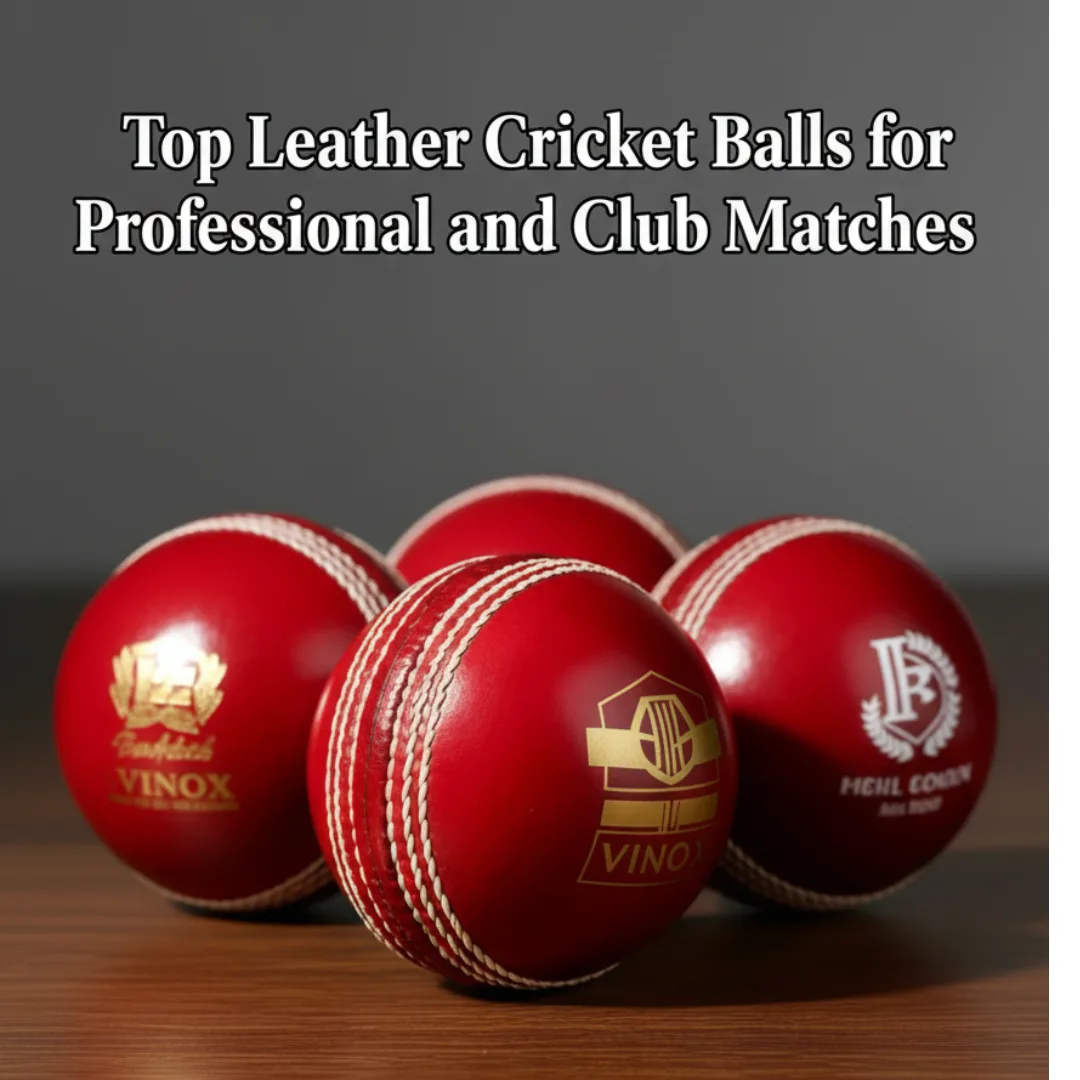
Top Leather Cricket Balls for Professional and Club Matches
A good cricket ball can shape an innings, change a bowling spell, and make a match memorable. Whether you’re organizing a club fixture or preparing for a professional contest, choosing the best leather cricket ball matters. This guide walks you through the top leather cricket balls used across formats, what makes them great, and how to pick the best option for your match conditions.
Why the choice of ball matters
Leather cricket balls differ in leather quality, stitching, seam height, hardness, and manufacturing method. These characteristics affect swing, seam movement, durability, and how the ball wears over an innings. For club players and match organizers, selecting the right top leather cricket ball ensures fair competition and consistent performance — from the first over to the last.
The top leather cricket balls (overview)
Here are the most trusted leather ball brands and types used in professional and club cricket worldwide:
Vinox Sports: Crafting Quality Leather Cricket Balls
When it comes to durability and precision, Vinox Sports stands out among emerging Indian manufacturers of leather cricket balls. Known for its meticulous craftsmanship and use of premium-grade leather, Vinox produces match-ready balls ideal for both club and professional games. Each ball undergoes strict quality checks for seam balance, shape retention, and consistent bounce. Whether it’s the Vinox SUMO Leather Cricket Ball built for 40–50 overs or their premium red series for test-level play, Vinox ensures top-notch performance that meets international standards — making it a trusted choice for players who demand excellence from every delivery.
Dukes (England-style, hand-stitched)
Best for: Red-ball Test cricket and first-class matches on green, seam-friendly pitches.
Why it’s top-tier: Dukes balls are renowned for their pronounced seam and premium hand-stitched construction. The raised seam helps bowlers extract movement off the pitch and through the air, especially in overcast English conditions. They tend to retain shape and seam definition longer than many machine-stitched alternatives.
Kookaburra (Australian style)
Best for: International and domestic limited-overs and red-ball matches, particularly on flatter, faster wickets.
Why it’s top-tier: Kookaburra balls are used widely in international cricket outside England. The leather is high-quality and the finish is smoother, which means less exaggerated seam movement but consistent performance and predictable behavior. Kookaburra produces both red and white balls for different formats and has variants designed for swing or durability.
SG (Indian subcontinent standard)
Best for: Club and domestic matches in India and similar conditions; suitable across formats.
Why it’s top-tier: SG balls are built to withstand hot, abrasive pitches. They combine a sturdy leather cover with a reliable seam construction that offers a balance between durability and responsiveness. Many Indian domestic competitions and clubs prefer SG for its cost-to-performance ratio.
Gray-Nicolls & Gunn & Moore (GN)
Best for: Clubs and academy matches seeking consistent quality with a British heritage.
Why it’s top-tier: These brands blend traditional craftsmanship with modern finishing, producing balls with good seam visibility and balanced wear characteristics. They’re popular at club level across the UK and beyond.
Premium niche / specialty balls
Best for: Specific conditions (e.g., pink balls for day-night Tests, white balls for white-ball cricket).
Why they matter: Manufacturers now make balls targeted to formats — pink balls for night visibility, white balls with lacquered finishes to retain visibility and hardness in limited-overs games. Choose format-specific balls to match competition rules.
Key features to evaluate
When selecting a leather cricket ball, consider these attributes:
Stitching: Hand-stitched balls typically have a more pronounced seam and last longer; machine-stitched balls can be more economical.
Seam height & definition: A higher, well-defined seam aids swing and seam movement — valuable for pace bowlers.
Leather quality: Full-grain leather delivers better durability and predictable wear patterns.
Core & weight: Proper core composition ensures consistent bounce; balls must meet regulation weight for official matches.
Finish: Lacquered finishes (common on white and pink balls) help with visibility and artificial shine, but can affect swing behavior.
Choosing a ball for your match
Professional / first-class matches: Opt for hand-stitched, full-grain leather balls from Dukes, Kookaburra (format-specific variant), or top-grade Gray-Nicolls/GN. These provide consistent performance over longer durations.
Club cricket: SG, Gray-Nicolls, and mid-range Kookaburra models strike a good balance between cost and performance. If budget allows, invest in hand-stitched variants for better longevity.
Limited-overs / T20: Use white balls with lacquered finishes that withstand repeated hitting and remain visible. Top brands produce white variants specifically tuned for limited-overs durability.
Day-night / pink-ball Tests: Choose pink balls engineered for visibility under lights and with finishes that manage wear differently from red balls.
Care and handling — get the most from each ball
Store balls in a cool, dry place away from direct sunlight.
Rotate multiple match balls during long fixtures to spread wear.
Avoid polishing with abrasive or greasy substances — use manufacturer-recommended cleaners or a soft cloth.
Replace severely scuffed or misshapen balls; integrity and safety are paramount.
Final tips for match organizers and players
Always check competition regulations for approved ball brands and models.
Buy from authorized dealers to avoid counterfeit or substandard balls.
For club budgets, consider buying in bulk — many suppliers offer match packs at discounts.
Keep spare balls on hand (white/red/pink depending on the format) for mid-game replacements if needed.
Conclusion
Choosing the right leather cricket ball can elevate the quality of play and fairness of a match. From Dukes’ hand-stitched seams to Kookaburra’s international staples and SG’s subcontinental resilience, there’s a best leather cricket ball for every condition and level. Match organizers should weigh format, pitch conditions, and budget when deciding — and players should respect the ball: proper care keeps it performing at its best, over and over.
 No products in the cart.