
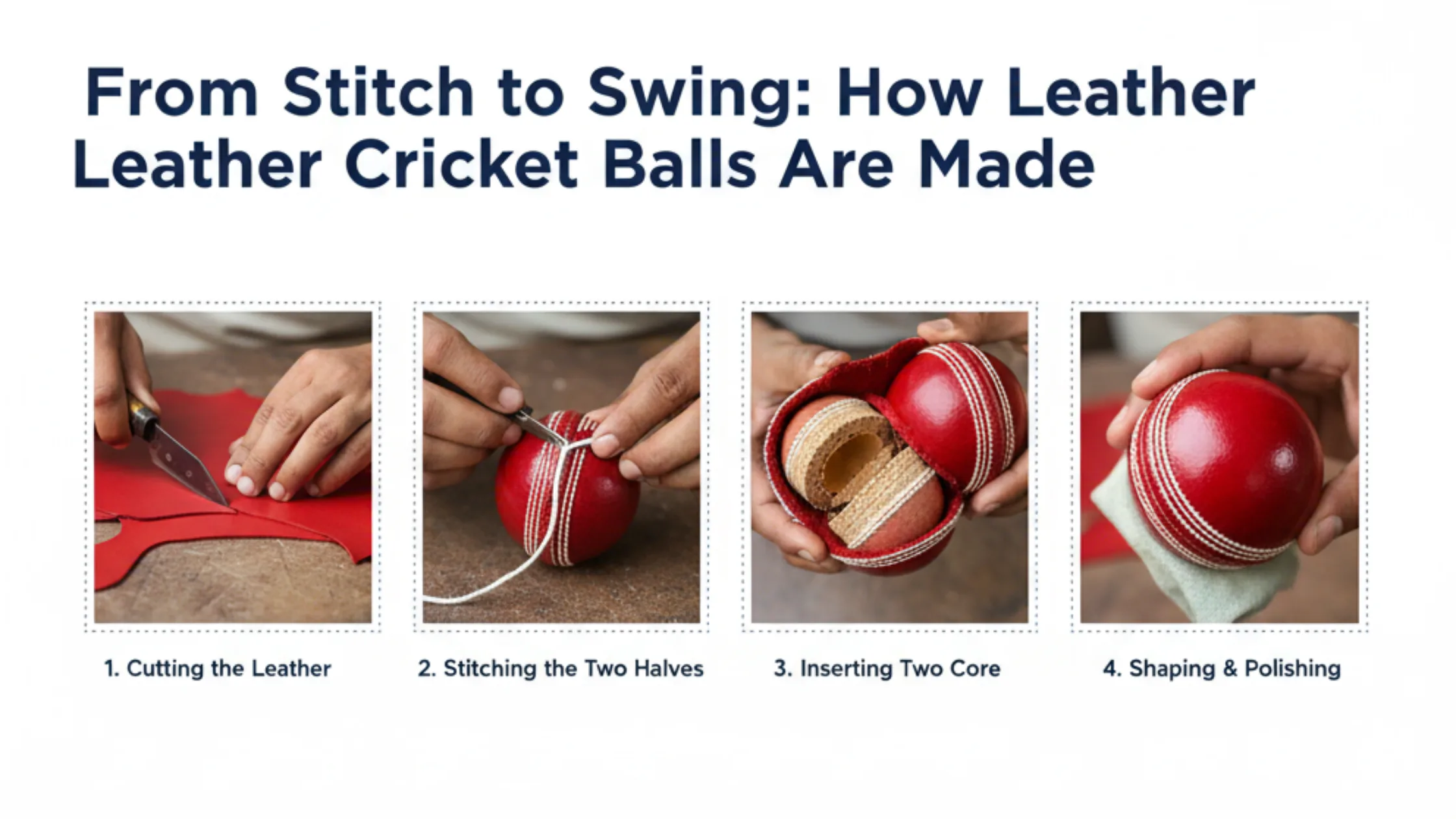
From Stitch to Swing: How Leather Cricket Balls Are Made
Introduction
Cricket is a game of precision, timing, and craft — and nothing embodies that craft better than the leather cricket ball. Its weight, seam, and shine define the rhythm of the match, influencing how the ball swings, spins, and bounces. But behind that perfect delivery or blistering cover drive lies a fascinating journey — how leather cricket balls are made. From carefully selected leather to the final polish before play, every ball goes through a detailed process that balances tradition, science, and craftsmanship.
1. The Heart of the Game: Selecting the Leather
Manufacturers begin the process by selecting high-quality cowhide leather. They choose only the toughest and most consistent hides because the ball must endure powerful strikes and long hours on the field.
They then tan the leather to preserve and strengthen it while keeping it flexible. Top brands often use vegetable tanning, which keeps the leather durable and shiny even after extended play.
They maintain a smooth grain and consistent thickness to achieve better polish, improved swing, and even bounce. This carefully prepared leather forms the outer shell of the ball, creating the foundation for its feel and performance.
2. Shaping the Core: The Cork and Rubber Combination
Craftsmen place the core — the “heart” of the cricket ball — at its center, determining its bounce, hardness, and overall response when it hits the pitch or bat.
They create the core from a small cork sphere and wrap it tightly with layers of twine and rubber. The process demands precision — if they wrap it too tightly, the ball becomes too hard; if too loosely, it loses its rebound.
Next, they weigh the core carefully to ensure it meets the standard weight of a cricket ball, between 155.9 and 163 grams for men’s cricket.
Once balanced perfectly, the craftsmen prepare the core to be dressed in leather, giving the ball its distinctive character and finishing touch.
3. The Art of Cutting and Stitching the Leather
In this step, craftsmen combine skill and tradition to bring the cricket ball to life. They cut four identical pieces of leather to form the outer shell and dye, polish, and press them to create the iconic red, white, or pink finish.
Next, they sew the pieces together in pairs to form two hemispherical cups. Afterward, they place these halves over the cork core and stitch them together using waxed linen thread — a time-honored process known as hand-stitching.
Each professional-grade ball contains 80 precise hand stitches, split into two sets of 40 on either side of the raised seam. Bowlers grip this seam to generate swing and spin, making it one of the most crucial parts of the ball’s design.
The accuracy of each stitch directly influences the ball’s aerodynamics. Even the slightest variation in seam height or alignment can alter the ball’s flight, proving that every stitch plays a vital role in performance.
4. Polishing and Pressing: The Finishing Touch
Once stitched, the ball undergoes pressing to give it the perfect spherical shape. Machines or manual rollers compress the leather evenly, ensuring the surface is smooth yet firm.
Then comes the polishing process, where the ball is coated with layers of lacquer or wax-based polish. This finish gives the ball its glossy sheen, protects it from moisture, and helps it swing better through the air.
Red balls are polished more heavily for longer formats like Test matches.
White balls used in ODIs and T20s receive special coatings to resist discoloration under floodlights.
Pink balls, used for day-night Tests, require additional treatment to maintain visibility and durability.
Each finish not only defines the look of the ball but also its behavior — red balls swing longer, white balls retain shine for fewer overs, and pink balls are designed for enhanced visibility.
5. Testing and Quality Control
Before a cricket ball earns its place on the field, it must pass through rigorous quality checks. These include:
Weight and Circumference Tests – ensuring the ball conforms to ICC standards.
Bounce Test – checking the rebound consistency.
Seam and Shape Inspection – guaranteeing no loose stitching or deformities.
Compression Tests – simulating the impact of repeated high-speed bowling.
Only after passing these stages does the ball get stamped with the brand logo and model type — a mark of quality assurance.
Top manufacturers like Vinox Sports, SG, Kookaburra, Dukes, and emerging brands like Vinox Sports take immense pride in these final checks, ensuring every ball reflects the highest level of craftsmanship.
6. The Science Behind the Swing
A cricket ball’s construction directly influences its movement in the air. The raised seam, polished surface, and density of leather work together to affect airflow.
When new, the smooth, shiny side encourages conventional swing.
As one side roughens with play, bowlers exploit reverse swing, especially at high speeds.
The tight stitching ensures the seam remains pronounced, giving spinners and seamers grip and control.
Thus, the art of making a cricket ball goes beyond craftsmanship — it’s also an exercise in aerodynamics and physics.
7. From Workshop to Wicket
The journey from stitch to swing is a tribute to the unseen artisans behind cricket. Every ball used in an international match carries with it the legacy of handcraftsmanship, precision, and centuries-old tradition.
When bowlers grip the seam or batters face the red cherry under pressure, they’re engaging with more than just a piece of leather — they’re connecting with the soul of the game.
Conclusion
From the tanner’s hands to the bowler’s grip, the leather cricket ball symbolizes perfection achieved through dedication and detail. Each step — tanning, stitching, polishing, and testing — contributes to the magic that unfolds on the field. The entire process reflects how leather cricket balls are made, combining craftsmanship and precision to create the soul of every cricket match.
So the next time you see a fast bowler send down a swinging delivery or a spinner extract sharp turn, remember — it all began with a craftsman’s steady hand, a needle, and a dream to create the perfect cricket ball.
 No products in the cart.