
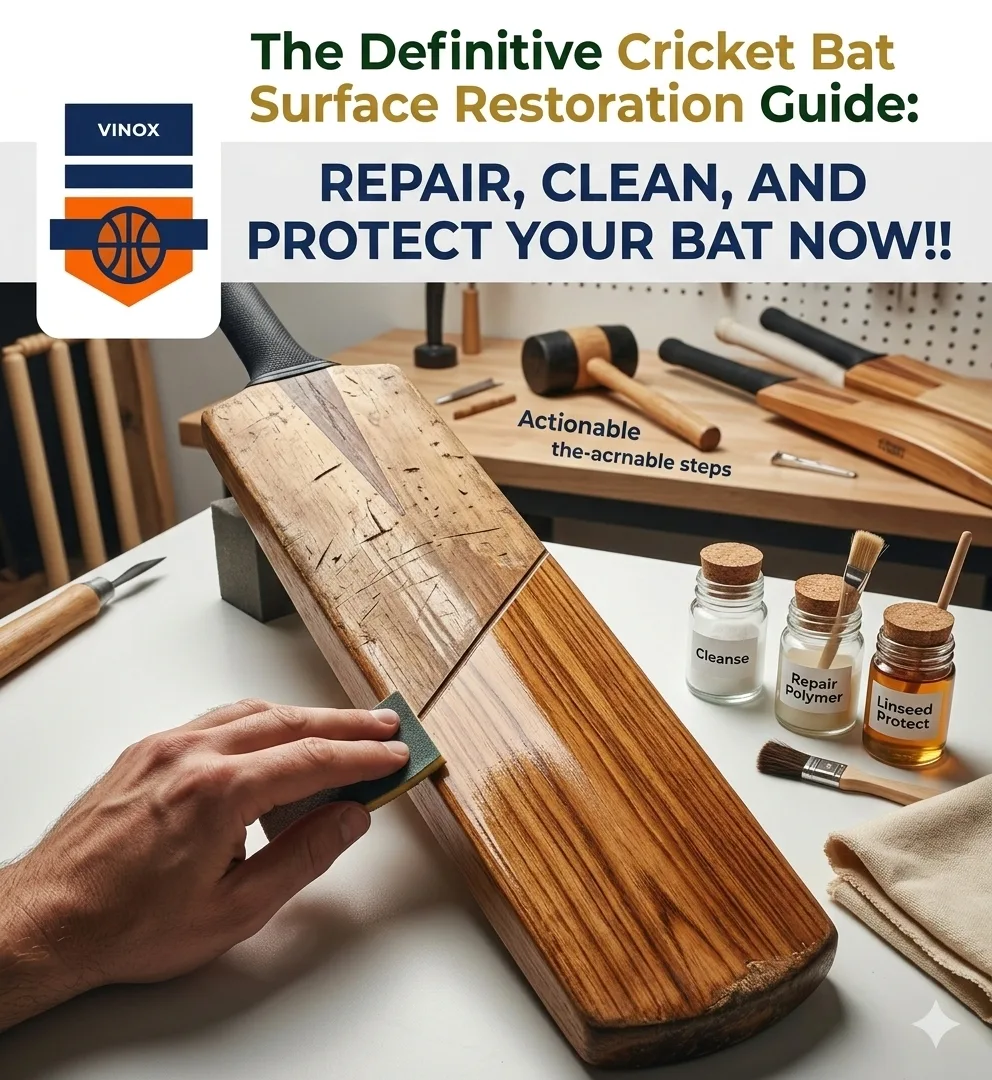
Sanding and oiling bat A cricket bat is an essential piece of equipment for every player. However, after regular matches and practice sessions, the bat surface can become rough, cracked, or dirty. Because of ball impact and weather conditions, the wood slowly loses its smooth finish. Therefore, restoring the bat surface becomes very important.
This Cricket Bat Surface Restoration Guide explains how to repair, clean, and protect your bat in simple steps. By following these tips, players can improve bat performance and extend its lifespan.
–> Explore premium quality and expertly crafted bats at Vinox Sports to find the perfect match for your playing style and performance needs.
Why Cricket Bat Surface Restoration Matters
First of all, the surface of a bat directly affects shot power and durability. When the bat face becomes dry or cracked, the performance may drop. Therefore, regular maintenance helps maintain the quality of the wood.
Many players invest in quality equipment such as a lightweight cricket bat for players because it improves control and swing speed. However, even a good bat needs proper care.
In addition, players across cricket bat India markets often look for ways to keep their bats in good condition for a longer time.
Step 1: Inspect the Bat Surface Carefully
Before starting the restoration process, examine the bat closely. Look at the front face, edges, and toe area.
Check for the following problems:
Small surface cracks
Ball impact marks
Dirt or dust buildup
Minor dents on the face
If the damage is small, you can fix it easily at home. However, large cracks may require professional repair.
Both a cricket bat for beginners and a cricket bat for professional players need regular inspection to maintain performance.
Step 2: Clean the Bat Surface Properly Sanding and oiling bat
Next, clean the bat surface carefully. Dirt and dust usually collect during matches and practice sessions.
First, wipe the bat with a dry cloth. This removes loose dust and dirt from the surface. After that, use a slightly damp cloth to remove ball marks.
However, avoid using too much water because moisture can damage the willow wood.
Also, do not use strong chemicals while cleaning. Gentle cleaning methods protect the wood and maintain the bat surface.
As a result, the bat becomes smoother and ready for the next repair step.
Step 3: Repair Small Cracks and Dents
After cleaning the bat, repair small cracks and dents on the surface.
Start by using fine sandpaper to smooth the damaged area. Sanding helps remove rough wood fibers and prepares the surface for repair.
Next, apply a small amount of wood glue if the crack looks slightly open. Then press the wood gently to close the gap.
Players who use a cricket bat for leather ball often see small cracks because the hard ball creates strong impact on the bat face.
To strengthen the repaired area, you can also apply bat tape or fiber tape.
Step 4: Sand the Bat Surface Lightly
Sanding plays an important role in restoring the bat surface. However, it must be done carefully.
Use fine sandpaper and rub the bat surface gently. This process removes small dents and smooths the wood.
At the same time, avoid sanding too much wood. Excess sanding can reduce the bat thickness and affect performance.
After sanding, wipe the bat again with a clean cloth to remove dust.
This step helps prepare the bat for protection and finishing.
Step 5: Apply Linseed Oil for Protection Sanding and oiling bat
Next, apply linseed oil to protect the willow wood.
Linseed oil keeps the bat surface healthy and prevents the wood from drying. Apply a small amount of oil using a soft cloth and spread it evenly on the bat face.
Then allow the bat to rest for several hours so the oil can absorb into the wood.
Many players who use a power hitting cricket bat T20 regularly oil their bats because aggressive batting creates more stress on the bat face.
However, do not apply too much oil. Excess oil may increase the weight of the bat.
Step 6: Apply Protective Sheet or Tape Sanding and oiling bat
Finally, protect the bat surface with a protective sheet.
A clear anti-scuff sheet protects the bat face from scratches, ball marks, and minor cracks. In addition, edge tape helps protect the sides of the bat.
Players who enjoy casual matches often use a cricket bat for tennis ball, and protective sheets can help extend the life of such bats.
Proper protection reduces future damage and keeps the bat surface strong.
Tips to Maintain Your Cricket Bat
Besides restoration, regular care also helps maintain the bat.
Follow these simple tips:
Store the bat in a dry place
Avoid using the bat in wet conditions
Clean the bat after matches
Oil the bat occasionally
Check for cracks regularly
These habits help maintain the bat for a long time.
Players looking for value equipment often search for the best cricket bat under ₹5000, while others prefer the best English willow cricket bat under ₹10000 for better performance.
Many affordable cricket bat brands India now offer durable bats that last longer when maintained properly.
Conclusion
Cricket bat restoration is a simple but important process. Over time, the bat surface may develop cracks, dents, and dirt. However, proper cleaning and repair can restore the bat and improve performance.
First, inspect the bat carefully. Next, clean the surface and repair small cracks. Then sand the bat lightly and apply linseed oil. Finally, protect the bat with an anti-scuff sheet or tape.
By following this Cricket Bat Surface Restoration Guide, players can keep their bats strong, smooth, and ready for powerful shots on the cricket field.

 No products in the cart.