
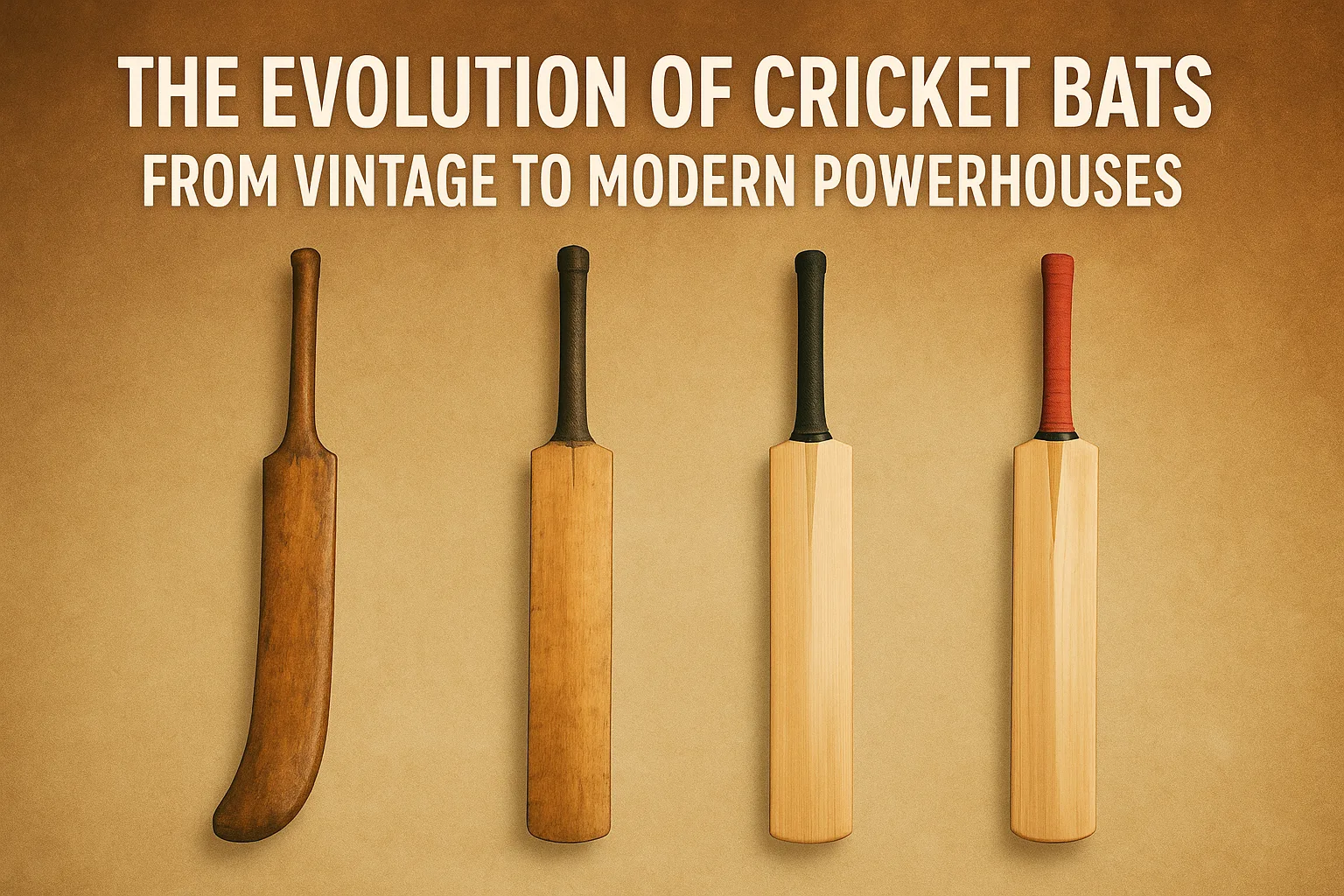
Cricket, often called the “gentleman’s game,” has seen countless changes over the centuries—from the way it is played to the equipment used by players. Among all cricketing tools, none is as iconic and symbolic as the cricket bat. The evolution of cricket bats has been remarkable, shifting from a simple wooden club to a carefully engineered powerhouse designed for maximum performance. This journey reflects tradition meeting innovation, where heritage and science blend to shape modern-day cricket. And when it comes to finding the best cricket bat, Vinox Sports continues to lead the way with craftsmanship, power, and precision.
The Humble Beginnings of Cricket Bats
When cricket was first played in the 16th and 17th centuries, bats looked nothing like the ones we see today. Early bats resembled curved hockey sticks rather than flat-bladed bats. This was because the ball at the time was bowled underarm along the ground, making a curved bat practical for striking low deliveries.
The earliest recorded bat dates back to 1624. It had a long handle and a bent blade, perfectly suited for sweeping balls bowled along the ground. As cricket evolved and bowlers began experimenting with different deliveries, batsmen needed equipment that could handle the challenge. This necessity sparked the slow but steady evolution of cricket bats.
Even in those early days, players were seeking ways to improve their game with better tools. That same passion continues today, where choosing the best cricket bat is essential for performance. Modern brands like Vinox Sports carry forward this legacy by blending traditional craftsmanship with cutting-edge technology, making them a trusted name among professionals and enthusiasts alike.
The 18th Century: The First Flat Blade
By the 18th century, bowlers started delivering the ball with a bounce, forcing batsmen to adapt. The curved bat gradually gave way to the straight, flat blade we recognize today. This innovation allowed batsmen to defend effectively and play more controlled shots.
These early flat bats were heavy, often weighing close to 5 pounds. Crafted from English willow, they had thick blades but lacked balance. Still, this was the foundation of the modern cricket bat, setting the stage for centuries of evolution.
The 19th Century: Standardization and Refinement
The 19th century was a turning point in the evolution of cricket bats. By now, cricket had become more organized, and standardized rules and equipment were introduced. The flat-faced bat with a pronounced spine became the accepted design.
This era also saw bats become lighter and better balanced, thanks to improved carpentry and design techniques. The use of handles made of cane—rather than solid willow—reduced weight and improved flexibility. This change gave batsmen better control and allowed for more elegant stroke play.
By the mid-1800s, legendary batsmen such as W.G. Grace were showcasing the potential of these improved bats, combining power with finesse.
The 20th Century: The Rise of Power Hitting
The 20th century brought rapid changes in cricket, and bats evolved to match the demands of the game. Players now faced faster bowlers, longer matches, and eventually, the introduction of limited-overs cricket.
Thicker blades: Manufacturers began designing bats with thicker blades and heavier profiles to help batsmen generate power.
Better balance: Despite the added bulk, improved weight distribution made bats easier to handle.
Cane handles with rubber grips: This innovation provided shock absorption, reducing strain on players’ hands and wrists.
By the late 20th century, cricket bats became more specialized. Power hitters preferred heavier bats, while stroke-makers opted for lighter, well-balanced models. Brands such as Gunn & Moore, Gray-Nicolls, and SS Ton became household names, each pushing innovation further.
The 21st Century: Modern Powerhouses
The bats we see in the hands of today’s players are marvels of craftsmanship and technology. Modern cricket bats are no longer just pieces of willow; they are engineered tools built for maximum efficiency.
Key Features of Modern Bats
Thicker edges – Today’s bats boast edges as thick as 40 mm, adding to their power.
Massive sweet spots – The area that delivers maximum impact is now larger, making mishits less risky.
Lightweight profiles – Despite their size, bats are surprisingly light, thanks to advanced pressing techniques.
Custom designs – Professional players often get tailor-made bats suited to their grip, stance, and style.
Modern bats, such as those used by players like Virat Kohli, Chris Gayle, and Jos Buttler, allow for explosive hitting. Boundaries that once required perfect timing can now be cleared with relative ease.
Technology Meets Tradition
While English willow remains the gold standard for professional bats, alternatives such as Kashmiri willow and even experimental materials like carbon reinforcements have emerged. Manufacturers use advanced computer modeling and machine pressing to ensure precision.
Despite these innovations, the essence of the cricket bat remains rooted in tradition. Willow continues to be carefully hand-picked and crafted, ensuring each bat has a unique “feel.” This blend of tradition and technology keeps cricket bats special in the eyes of players and fans alike.
Impact of Bat Evolution on the Game
The transformation of cricket bats has directly influenced how the game is played:
Bigger scores: Larger sweet spots and thicker blades have made high scoring more common.
Rise of T20 cricket: Modern bats suit aggressive styles, making formats like T20 thrilling for spectators.
Bowler’s challenge: The dominance of bats has forced bowlers to innovate, relying on variations, pace, and accuracy.
The Future of Cricket Bats
Looking ahead, the evolution of cricket bats shows no sign of slowing. With ongoing research in sports equipment, future bats may incorporate even lighter materials, better shock absorption, and enhanced durability. However, traditionalists argue that innovations must maintain balance in the game, ensuring bowlers are not overshadowed completely.
Conclusion
From the heavy, curved blades of the 17th century to the sleek, powerful designs of today, the cricket bat has undergone a fascinating transformation. Each stage of its evolution of cricket bats reflects the changing demands of the sport—whether adapting to new bowling techniques, improving player comfort, or meeting the explosive requirements of modern limited-overs formats.
Today, cricket bats are more than just equipment; they are symbols of power, precision, and heritage. For every player, choosing the best cricket bat is crucial to match their style and elevate performance. That’s where Vinox Sports stands out, offering expertly crafted bats that blend tradition with innovation, giving players the perfect balance of control and power.
As cricket continues to grow globally, the journey of the bat will also evolve—but one thing will remain certain: the harmony of heritage and modern craftsmanship will always define the future of the game.

 No products in the cart.