
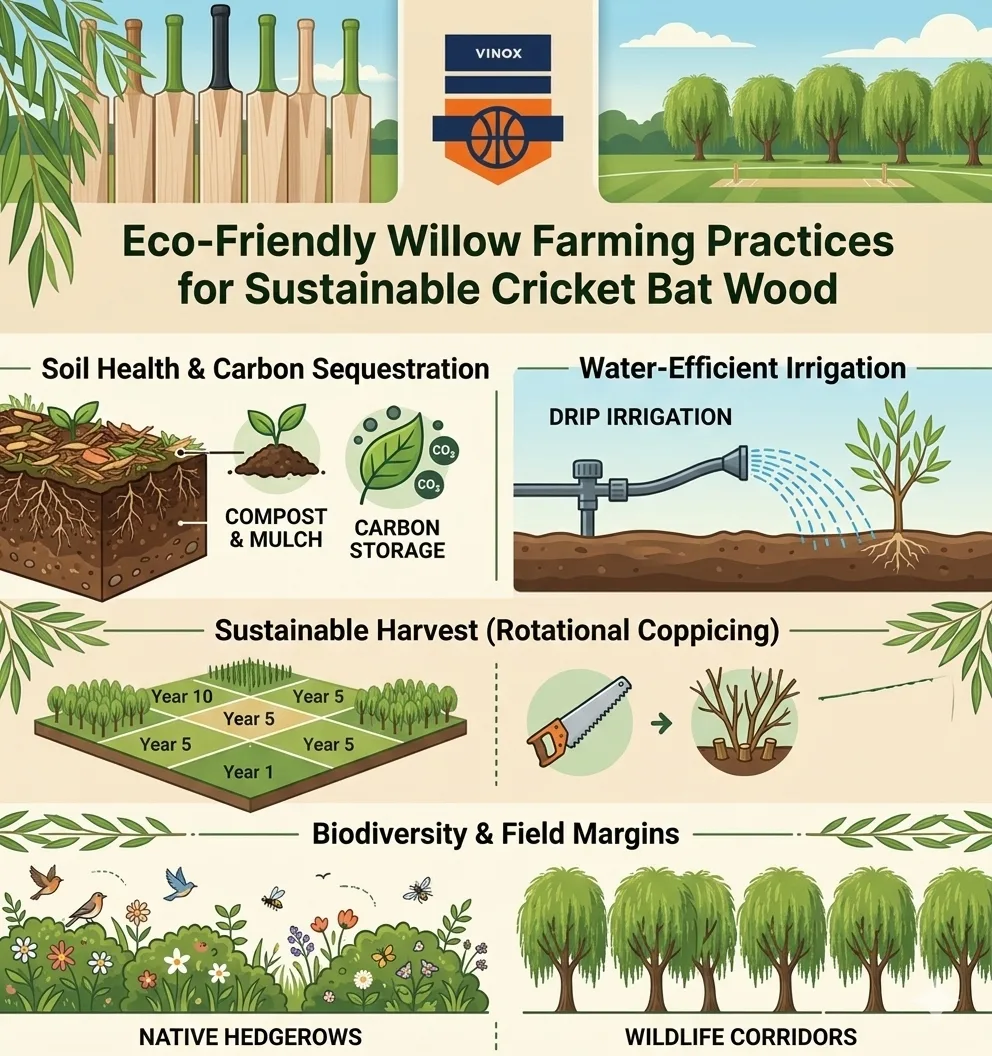
Cricket Bat Wood Sustainability Cricket bats are one of the most important pieces of equipment in cricket. Most quality bats are made from willow wood, which comes from specially grown willow trees. As the popularity of cricket grows, the demand for willow wood also increases. Therefore, farmers and cricket bat manufacturers must focus on eco-friendly willow farming practices.
Sustainable farming helps protect nature while ensuring that the cricket industry continues to get high-quality willow wood. Today, many manufacturers producing equipment such as a cricket bat for leather ball, cricket bat for tennis ball, and even a T20 cricket bat India style rely on responsibly sourced willow wood.
In this blog, we will explore eco-friendly willow farming practices and how they support sustainable cricket bat production.
–> Explore premium quality and expertly crafted bats at Vinox Sports to find the perfect match for your playing style and performance needs.
Importance of Sustainable Willow Farming Cricket Bat Wood Sustainability
First of all, willow trees take many years to grow. On average, a tree may take 15–20 years before it can be used to make a cricket bat. If trees are cut without proper planning, forests may slowly disappear.
However, sustainable farming methods ensure that trees are replanted after harvesting. This practice keeps the natural balance of the environment safe.
Sustainable willow farming helps:
Protect natural ecosystems
Maintain soil quality
Reduce environmental damage
Ensure long-term supply of cricket bat wood
Support cricket bat manufacturers and farmers
Because of this, many companies producing equipment such as a cricket bat for beginners or a cricket bat for professional players now prefer sustainably sourced wood.
Choosing the Right Land for Willow Trees
Another important step in eco-friendly willow farming is selecting suitable land. Willow trees grow best in fertile soil with good water availability. Farmers usually choose land near rivers or areas where the soil retains moisture.
However, cutting natural forests to create farms is not sustainable. Instead, farmers should use agricultural land or previously unused land.
Proper land selection helps willow trees grow strong and straight. As a result, the wood produced can be used to create high-quality bats such as a power hitting cricket bat or a lightweight cricket bat for players who prefer balanced equipment.
Using Organic Fertilizers Cricket Bat Wood Sustainability
Many traditional farming methods used chemical fertilizers. While they may increase growth quickly, they can harm soil and water in the long run.
Eco-friendly willow farms use organic fertilizers such as:
Natural compost
Cow manure
Plant-based fertilizers
Green manure crops
These organic materials improve soil fertility naturally. In addition, they increase soil microorganisms that support healthy tree growth.
Because of this natural farming approach, the willow wood becomes stronger and more suitable for making premium cricket bats, including products often found among affordable cricket bat brands India.
Water Conservation in Willow Farming
Water is essential for willow tree growth. However, sustainable farming focuses on using water wisely.
Farmers now use modern water conservation methods like:
Drip irrigation systems
Rainwater harvesting
Soil moisture monitoring
Mulching to retain moisture
Drip irrigation allows water to reach the tree roots directly. Therefore, less water is wasted. This method also helps trees grow evenly and produce high-quality wood.
Healthy and properly grown willow trees are important for creating bats across different categories, including the best cricket bat under ₹5000 and even premium products like the best English willow cricket bat under ₹10000.
Replanting Trees After Harvesting
One of the most important eco-friendly farming practices is replanting. Whenever farmers cut a mature willow tree, they plant new saplings in its place.
This process is called tree rotation farming.
For example:
Willow trees mature in 15–20 years
Farmers plant new trees every season
Different trees grow at different stages
Because of this cycle, farms always have trees growing. As a result, the supply of willow wood remains steady without harming the environment.
Natural Pest Control Methods
Pests can sometimes damage willow trees. Traditionally, farmers used strong chemical pesticides to control insects. However, heavy chemical use can harm wildlife and soil health.
Eco-friendly willow farms prefer natural pest control methods such as:
Beneficial insects that eat pests
Organic pest control sprays
Plant-based pest repellents
Crop diversity around farms
These methods protect willow trees while keeping the surrounding environment safe.
In addition, natural pest control ensures that the wood quality remains pure, which is important for manufacturing high-performance cricket bats.
Sustainable Harvesting Techniques
Harvesting willow trees must also be done responsibly. Farmers cut only mature trees and avoid damaging young trees nearby.
Some responsible harvesting practices include:
Cutting only fully grown trees
Using controlled cutting tools
Protecting young saplings
Avoiding unnecessary land clearing
Because of these methods, willow farms can continue producing wood for decades
Supporting the Future of Cricket Equipment
Eco-friendly willow farming is important for the future of cricket. As the sport grows worldwide, the demand for cricket bats will continue increasing.
Players of all levels—from beginners to professionals—need reliable cricket bats. Whether someone is buying a beginner bat or looking for a professional-level bat, sustainable farming ensures the raw material remains available.
Manufacturers producing bats for different playing styles—from a tennis ball bat to a leather ball bat—depend heavily on responsibly grown willow wood.
Conclusion
Eco-friendly willow farming practices are essential for the long-term future of cricket bat production. Sustainable methods such as organic fertilizers, water conservation, natural pest control, and tree replanting protect both nature and the cricket industry.
By adopting responsible farming practices, farmers can continue producing high-quality willow wood for cricket bats while protecting forests and ecosystems.
As cricket continues to grow globally, sustainable willow farming will play a key role in ensuring that future generations can enjoy the game with well-crafted and environmentally responsible cricket bats. 🌱🏏


 No products in the cart.