
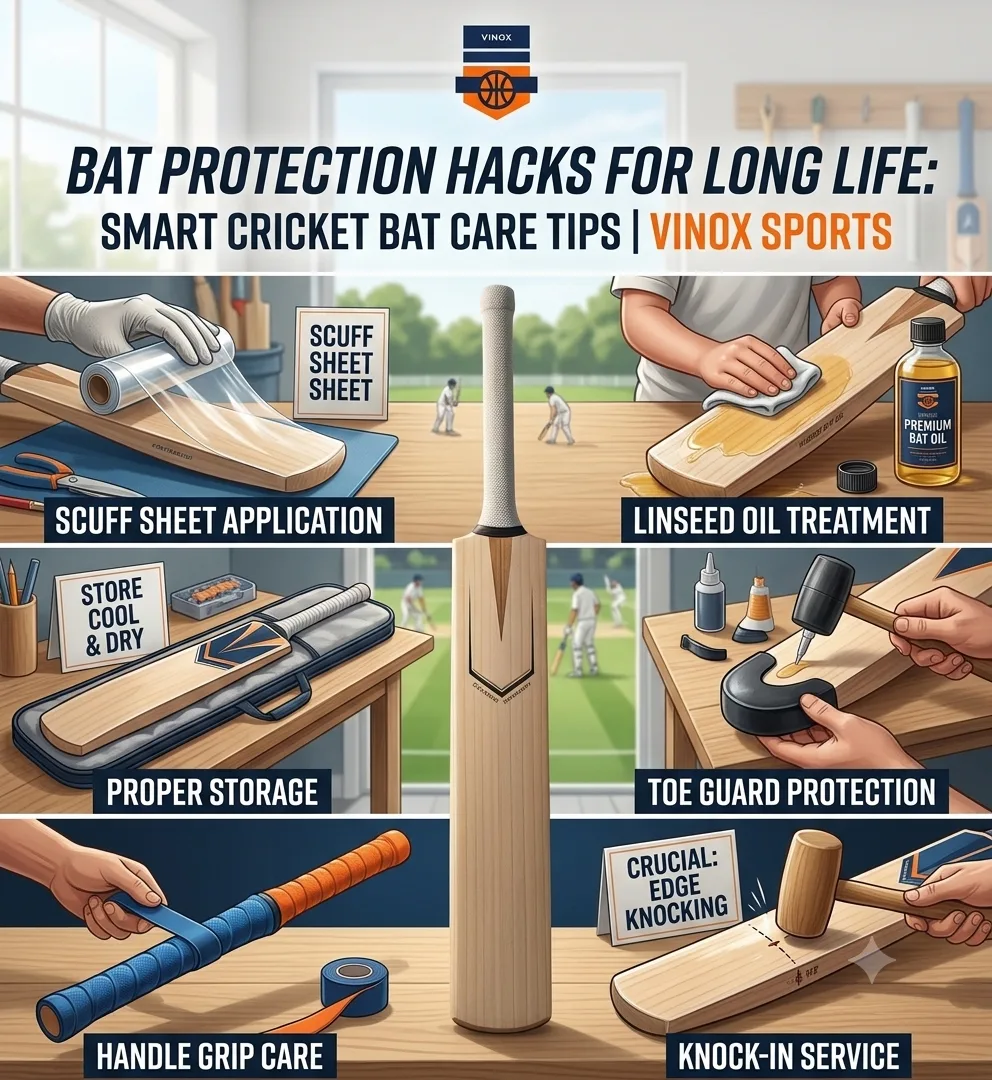
Cricket Bat Long Life A cricket bat is more than just sports equipment. It is an important part of a player’s game. A well-maintained bat can provide better performance and stay useful for a longer time. However, regular use can cause scratches, dents, cracks, and other damage.
Therefore, every player should know the right bat protection hacks for long life. Good care does not require a lot of effort. In fact, a few simple habits can protect your cricket bat and help maintain its performance.
Whether you play leather-ball cricket, tennis-ball cricket, T20 matches, or regular practice games, proper care is important. So, let’s look at some smart cricket bat care tips that can help extend the life of your bat.
Why Is Cricket Bat Protection Important?
A cricket bat faces strong impact during every match. The ball can hit the blade at high speed. As a result, the bat can develop marks, dents, or cracks over time.
Moreover, moisture, heat, and poor storage can affect the wooden blade. A bat that is not cared for properly may lose its shape and performance.
For this reason, regular bat protection is essential. It keeps your bat in better condition and can also help you avoid unnecessary repair costs.
1. Choose the Right Bat for Your Game Cricket Bat Long Life
The right bat depends on your playing style, ball type, and level of cricket. For example, a Cricket bat for leather ball should be selected according to the demands of leather-ball cricket.
Similarly, players who mainly play with tennis balls should select equipment designed for that purpose. A Cricket bat for tennis ball can offer suitable weight and construction for tennis-ball games.
Furthermore, beginners and experienced players often have different requirements. A Cricket bat for beginners should be comfortable and easy to control. On the other hand, a Cricket bat for professional players may focus more on balance, willow quality, pickup, and performance.
2. Always Use a Good Bat Cover Cricket Bat Long Life
One of the easiest ways to protect your bat is to use a good-quality bat cover.
A cover protects your bat from dust, scratches, moisture, and accidental impact. It also makes the bat easier to carry when you travel for matches or practice.
However, never put a wet bat inside a closed cover. First, wipe the bat with a clean, dry cloth. Then, allow it to dry naturally before storing it.
For extra safety, you can choose a padded cricket bat cover. This is especially useful if you travel frequently with your cricket kit.
3. Keep Your Cricket Bat Away From Water
Wood can be affected by excess moisture. Therefore, water should be kept away from your cricket bat as much as possible.
Avoid leaving your bat on wet ground. Also, do not use it in very wet conditions unless it is designed for that type of play.
If your bat becomes wet, wipe it gently with a dry cloth. After that, keep it in a dry and well-ventilated place.
Never use a heater, hair dryer, or strong direct heat to dry your bat. Sudden heat can damage the wood.
4. Protect the Bat Toe Cricket Bat Long Life
The toe is one of the most exposed parts of a cricket bat. It can hit the ground during normal play. Therefore, it needs extra attention.
A quality toe guard can help protect the bottom of the bat from moisture and ground contact. It can also reduce wear when you play on hard or artificial pitches.
Furthermore, check the toe regularly. If you notice a crack or serious damage, get it checked before using the bat again.
5. Use an Anti-Scuff Sheet Cricket Bat Long Life
The face of a cricket bat can receive a lot of impact. As a result, small scratches and surface marks may appear.
An anti-scuff sheet can provide an extra layer of protection. It helps reduce minor surface damage during regular use.
However, the sheet should be applied correctly. A poorly fitted sheet can create air bubbles or affect the bat’s surface.
Therefore, follow the product instructions carefully when applying protective material.
6. Check Your Bat After Every Match
Do not wait until your bat develops a major crack. Instead, make a quick inspection part of your routine.
After every match or practice session, check the blade, edges, toe, handle, and grip.
Look for:
- Small cracks
- Deep dents
- Loose areas
- Edge damage
- Toe damage
- Handle movement
- Worn-out grip
Small marks are normal with regular use. However, serious damage should not be ignored.
By finding problems early, you can often prevent further damage.
7. Maintain the Bat Handle and Grip
The handle gives you control over your cricket bat. It also absorbs vibration when you hit the ball.
Therefore, the handle should always be checked regularly. If it feels loose or unusual, stop using the bat and get professional advice.
The grip also needs attention. A worn or slippery grip can reduce your control. Consequently, the bat may slip from your hands during a shot.
Replace the grip when it becomes damaged or loses its grip. A fresh grip can provide better comfort and control
8. Store Your Bat in the Right Place
Proper storage is one of the most important cricket bat care habits.
Keep your bat in a cool, dry, and well-ventilated area. Avoid places with excessive moisture or extreme heat.
For example, do not leave your cricket bat inside a hot car for long periods. High temperatures can affect the wood and protective materials.
Also, never keep heavy items on top of your bat. Store it safely inside its cover where it cannot be crushed or dropped.
9. Avoid Sudden Temperature Changes
Cricket bats are made from natural wood. Therefore, sudden changes in temperature and humidity should be avoided.
For example, do not move your bat directly from an extremely cold room into strong outdoor heat. Instead, allow it to adjust naturally to the new environment.
This tip is particularly useful when you travel between different cities or play in different weather conditions.
10. Use the Right Ball With Your Bat
Different cricket bats are made for different types of play. Therefore, always use a bat according to its intended purpose.
Using the correct ball can reduce unnecessary wear. Moreover, it can help your bat perform as expected.
So, always check the bat specifications before choosing the ball. This simple step can protect the blade from excessive impact.
11. Choose a Bat According to Your Playing Style
Your playing style should also influence your bat selection. Players who enjoy aggressive shots often look for a Power hitting cricket bat with suitable weight distribution and a strong hitting area.
Similarly, players interested in shorter formats may prefer a T20 cricket bat India players can use for fast-paced cricket. Good balance and comfortable pickup are important when quick shots are required.
However, power should not come at the cost of control. Choose a bat that feels comfortable in your hands and matches your technique
12. Consider Quality and Budget Together
A good cricket bat does not always have to be extremely expensive. Players can find suitable options by comparing willow quality, weight, balance, handle design, and overall construction.
For example, someone searching for a Best cricket bat under ₹5000 should compare features instead of looking only at the price.
Likewise, players looking for premium willow can explore the Best English willow cricket bat under ₹10000 by comparing grade, weight, pickup, and finishing.
There are also many Affordable cricket bat brands India players can consider when they want a balance between price and performance.
For players who specifically want willow bats, Affordable English Willow Bats in India can be a practical choice when quality and budget both matter.
13. Never Hit Hard Objects With Your Bat
A cricket bat is designed to hit a cricket ball. It should never be used to hit stones, walls, poles, or other hard objects.
Sometimes, players use their bat to move objects or tap the ground. However, these habits can damage the edges and toe.
Therefore, use your bat only for cricket. This simple habit can make a noticeable difference to its lifespan.
14. Never Throw Your Cricket Bat
Getting out can be frustrating. Nevertheless, never throw your cricket bat in anger.
A sudden impact with the ground can damage the toe, edges, blade, or handle. In addition, such damage may not always be visible immediately.
Instead, place your bat down carefully after your innings.
This small habit protects your equipment and saves you from unnecessary repair costs.
15. Do Not Over-Oil Your Bat
Some cricket bats may require oiling during preparation or maintenance. However, too much oil can create problems.
Excess oil may affect the surface and weight of the bat. Therefore, always follow the manufacturer’s care instructions.
If you are not sure whether your bat needs oiling, ask a professional bat specialist.
Remember, more oil does not always mean better protection.
16. Get Cracks Repaired Early
Even with proper care, a cricket bat can develop cracks after regular use. Therefore, inspect your bat often.
A small crack should not be ignored. If the damage becomes larger, the bat may need more extensive repair.
Consequently, early professional repair can help protect the bat and prevent further damage.
Do not try to fix serious structural damage with random materials. Instead, take the bat to a qualified cricket bat repair specialist.
17. Clean Your Bat Regularly
Dust and dirt can build up on the bat after matches and practice sessions.
Therefore, clean the surface gently with a dry or slightly damp cloth when required. After cleaning, allow the bat to dry naturally.
Avoid strong cleaning chemicals unless the manufacturer specifically recommends them.
A clean bat not only looks better but also makes it easier to spot cracks and other damage.
Common Cricket Bat Care Mistakes to Avoid
Many players unknowingly damage their bats through simple mistakes.
For example, leaving a bat in a hot car can affect the wood. Similarly, storing a wet bat inside a closed cover can increase moisture problems.
Other common mistakes include:
- Throwing the bat
- Hitting hard objects
- Using the wrong ball
- Ignoring cracks
- Keeping heavy items on the bat
- Using excessive oil
- Drying the bat with direct heat
- Leaving the bat in damp areas
Therefore, avoid these habits whenever possible.
Simple Bat Care Routine After Every Game
You do not need a complicated routine to protect your cricket bat. A few minutes after every game can make a big difference.
Follow these simple steps:
- Wipe the bat after use.
- Check the blade and edges.
- Inspect the toe.
- Check the handle and grip.
- Keep the bat away from water.
- Allow moisture to dry naturally.
- Store the bat inside a suitable cover.
- Get serious damage checked quickly.
By following these steps regularly, you can reduce unnecessary wear and keep your bat ready for your next match.
Final Thoughts
A cricket bat is an investment in your game. So, proper care should become part of your regular cricket routine.
The best bat protection habits are simple. Use a good cover, protect the toe, avoid water, maintain the grip, and check your bat after every game. In addition, store it correctly and use the right ball.
With consistent care, your cricket bat can stay in better condition for longer. As a result, you can focus on your batting instead of worrying about equipment damage.
At Vinox Sports, we understand the importance of reliable cricket equipment. We aim to provide quality cricket bats and sports equipment for players at different levels.
Take care of your cricket bat, follow these smart care tips, and enjoy better performance for many innings to come.
Click Now & Buy
the Best Cricket Bats from – vinox sports


 No products in the cart.