
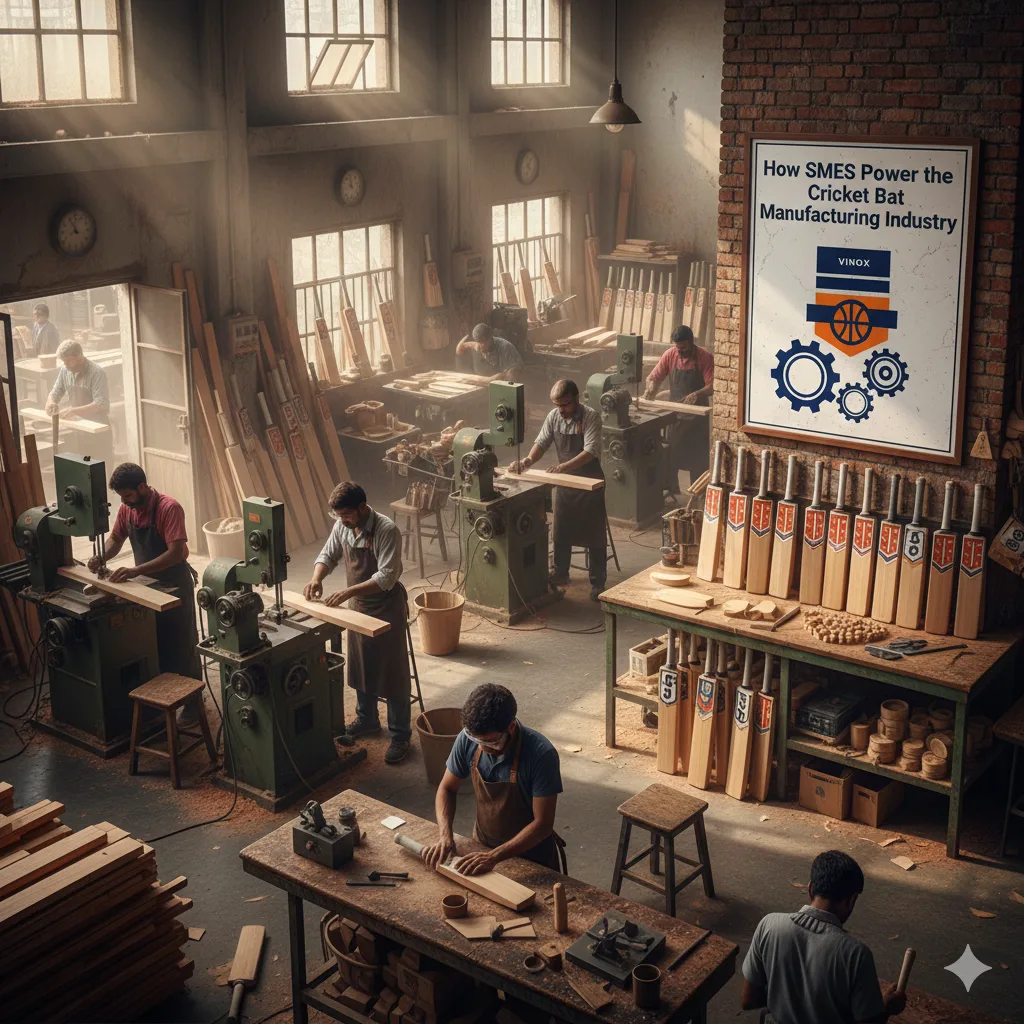
Cricket Bat Industry SMEs Cricket is more than just a sport in India—it is a culture. Behind every powerful shot and match-winning innings lies a cricket bat crafted with skill and dedication. While big brands often take the spotlight, the real strength of the cricket bat industry comes from SMEs (Small and Medium Enterprises).
From traditional workshops in Meerut to small manufacturing units across India, SMEs play a huge role in making everything from the best cricket bat under ₹5000 India to high-quality bats used by professionals. Let’s explore how SMEs power the cricket bat manufacturing industry and shape the future of the game.
Explore our premium range of cricket bats, including the best Kashmir willow cricket bat in India, at Vinox Sports to find the perfect bat for your game
SMEs Are the Backbone of Cricket Bat Manufacturing
Most cricket bats are not made in large factories. They are handcrafted in small and medium units run by skilled bat makers. These SMEs handle every step—selecting willow, seasoning, pressing, shaping, and finishing.
Because of their focus on craftsmanship, SMEs are able to produce some of the best cricket bat in India, trusted by beginners, club players, and even professionals. Their hands-on approach ensures better quality control than mass production.
Traditional Skills Passed Through Generations
Many SME owners come from families involved in bat making for decades. Skills such as blade shaping, spine profiling, handle fitting, and manual pressing are passed from one generation to the next.
This experience helps SMEs create reliable bats suitable for all formats, including cricket bat for T20 India, where balance and quick pickup are essential. This deep understanding of the game is what makes SME-made bats special.
Affordable Bats for Indian Players
Not every player can afford expensive equipment. SMEs help fill this gap by producing:
Budget-friendly Kashmir willow bats
Mid-range bats for club and league cricket
Practice and training bats
A well-made Kashmir willow cricket bat under ₹5000 offers great value for money. In fact, many players today actively search for the best kashmir willow cricket bat in India because SMEs deliver solid performance at affordable prices.
This is why SMEs dominate the segment for the best cricket bat under ₹5000 India.
Supporting Local Jobs and Economy
SMEs create employment at the local level. A single cricket bat unit supports wood cutters, bat makers, handle makers, polishers, and packers.
Cities like Meerut thrive because of these small businesses. When SMEs grow, they strengthen the local economy and ensure traditional skills stay alive. This community-based growth model is sustainable and socially responsible.
Custom Bats for Different Playing Styles
One major advantage of SMEs is flexibility. Unlike big factories, SMEs can easily customize bats.
They can adjust:
Bat weight and balance
Sweet spot placement
Edge thickness
Handle size
This is especially useful for players looking for a cricket bat for professional matches or format-specific bats like cricket bat for T20 India. Many professional players prefer SME-made bats because of this personal touch.
Innovation Without Mass Waste Cricket Bat Industry SMEs
SMEs continuously improve their bat-making process using player feedback. Many now use:
Better pressing techniques
Improved seasoning methods
Stronger handle binding
Eco-friendly polishing
These improvements help SMEs create durable bats that perform well season after season, including models that compete for the title of best cricket bat India 2026—without heavy industrial waste.
Natural and Sustainable Manufacturing Cricket Bat Industry SMEs
Most SMEs follow eco-friendly practices naturally:
Air-drying willow instead of chemical drying
Minimal electricity usage
Reusing wood waste
Small-batch production
This low-waste process supports “green” manufacturing. It proves that making the best cricket bat doesn’t require large factories—just skill, patience, and care.
Helping Indian Brands Grow Globally Cricket Bat Industry SMEs
Many popular Indian cricket bat brands depend on SMEs for manufacturing. SMEs often work as OEM partners and private-label producers.
Their ability to make consistent, high-quality bats helps Indian brands compete globally. As demand grows for the best cricket bat in India, SMEs remain the driving force behind exports and brand trust.
Challenges Faced by SMEs
Despite their importance, SMEs face challenges like rising raw material costs, limited access to modern machines, and competition from cheap imports.
Supporting SMEs with better policies and digital reach will help them continue producing high-quality bats for future generations.
Conclusion
SMEs are the real heroes of the cricket bat manufacturing industry. They combine tradition, skill, affordability, and sustainability to produce bats for every level—from beginners buying a Kashmir willow cricket bat under ₹5000 to professionals seeking high-performance gear.
Whether it’s the best cricket bat under ₹5000 India, a cricket bat for professional matches, or a future-ready best cricket bat India 2026, SMEs make it possible.
Supporting SME-made cricket bats means supporting quality, local jobs, and the future of cricket itself.
 No products in the cart.