
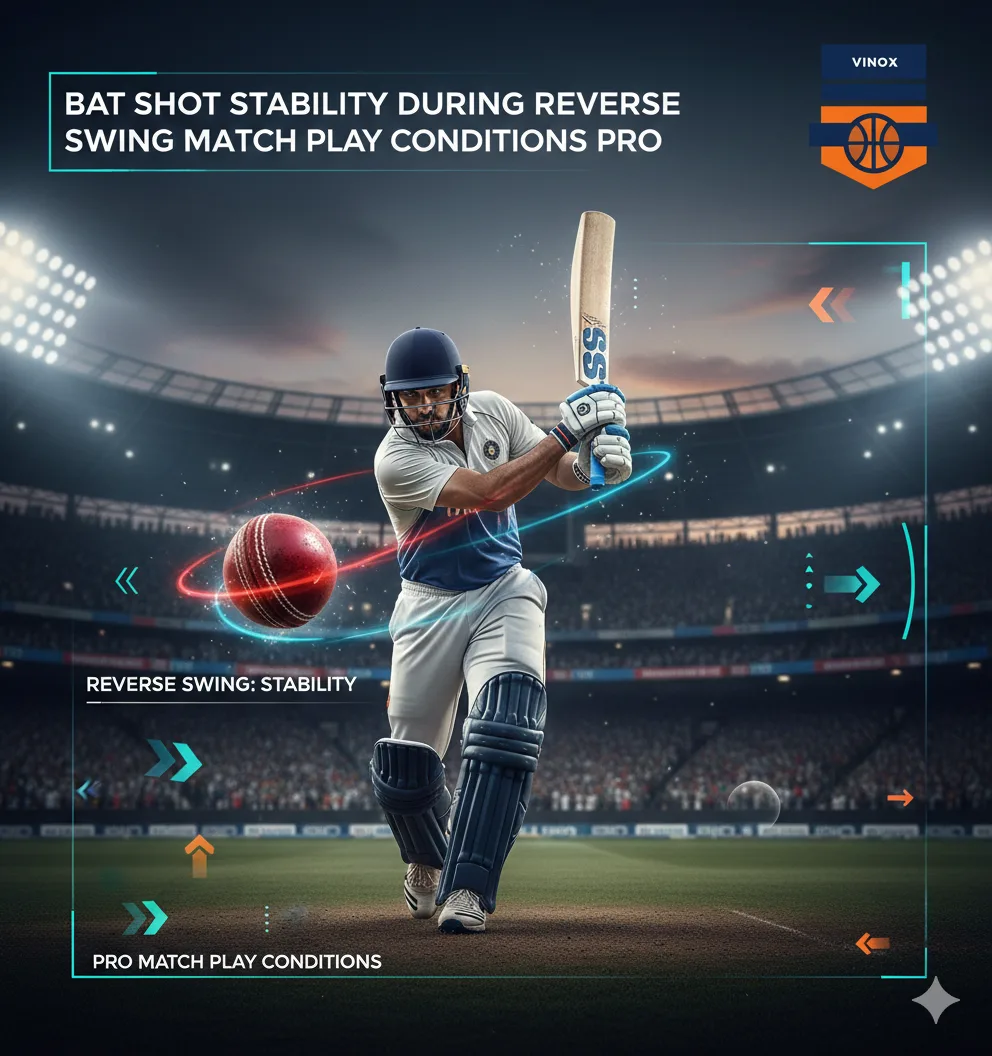
Bat balance for shots professional cricket is facing reverse swing. Unlike conventional swing, reverse swing occurs when the older ball moves unexpectedly in the air, making it harder for the batsman to predict its path. Maintaining bat shot stability is critical in such conditions to play controlled, accurate shots.
This guide explains how to improve shot stability during reverse swing and perform confidently under professional match conditions.
–> Explore premium quality and expertly crafted bats at Vinox Sports to find the perfect match for your playing style and performance needs.
Understanding Reverse Swing in Cricket Bat balance for shots
Reverse swing is different from normal swing. While normal swing moves the ball predictably toward the shiny or rough side, reverse swing can make the ball change direction late. This sudden movement increases the risk of edges, mistimed shots, or even getting out.
A stable bat is essential to counter reverse swing. With proper bat stability, energy transfers efficiently on impact, and vibrations are minimized. Players using high-quality bats, such as the Best cricket bat in India or the Best English willow cricket bat in India, benefit significantly from increased control during fast or unpredictable deliveries
Factors Affecting Bat Shot Stability
1. Bat Quality and Design Bat balance for shots
A well-designed bat absorbs shock, reduces vibration, and maintains balance. Modern bats with reinforced edges or handles enhance stability during high-speed deliveries.
2. Grip Technique
How a batsman holds the bat affects shot control. A relaxed yet firm grip allows better wrist flexibility and ensures the bat moves along a stable path.
3. Bat Weight and Balance
A heavier bat may generate more power but can reduce control if not balanced properly. Choosing the right weight and well-distributed mass is essential for stability, especially for shots against late swing deliveries.
4. Timing and Bat Speed
Precise timing is vital when facing reverse swing. A quick, controlled bat movement ensures maximum energy transfer and reduces the chance of edges.
Techniques to Improve Bat Shot Stability
1. Focus on the Ball Early Bat balance for shots
Watching the bowler’s release and tracking the ball early gives extra reaction time. Early focus helps align the bat for accurate impact.
2. Strong Base and Footwork
A solid stance with slightly bent knees ensures balance. Good footwork allows the batsman to move into the shot and maintain bat stability even against fast, swinging deliveries.
3. Controlled Backlift
A controlled backlift helps the bat travel along a straight path. Avoiding excessive or high backlift prevents wobble during impact.
4. Soft Hands
Holding the bat with slightly soft hands absorbs vibration from the ball. This technique improves control and stability during reverse swing.
Role of Bat Material and Edge Strength Bat balance for shots
The bat’s material and edge design play a crucial role in shot stability:
Willow Quality: Premium bats like the Best cricket bat in India or the Best English willow cricket bat in India provide excellent shock absorption.
Edge Design: Thick edges, as seen in the Best scoop cricket bat in India, improve structural strength and stability.
Handle Reinforcement: Bats with reinforced handles or carbon inserts minimize vibration and improve control. Players using the Best tennis cricket bat in India often notice smoother impact feedback.
Training Drills for Stability
1. Bowling Machine Drills Bat balance for shots
Simulate reverse swing speeds to practice bat alignment and footwork. Focus on maintaining a straight bat path.
2. Short Ball Practice
Short ball drills strengthen wrists and forearms. Controlled flicks help maintain bat stability against fast deliveries.
3. Shadow Batting
Shadow batting allows focus on bat swing without worrying about the ball. Repeated practice builds muscle memory and improves bat stability.
4. Reaction Ball Drills
Using reaction balls enhances reflexes. Faster responses allow batsmen to stabilize the bat quickly during late swing deliveries.
Match Play Tips for Reverse Swing Bat balance for shots
Anticipate late swing from experienced bowlers.
Maintain soft hands to improve feel and control.
Adjust stance slightly backward for short deliveries.
Keep the bat close to your body to reduce wobble.
Focus on shot selection; not every ball requires a big hit.
Using premium bats like the Best cricket bat under ₹5000, Best tennis cricket bat in India, or Best Kashmir willow cricket bat in India can improve confidence and performance during reverse swing
Common Mistakes Reducing Stability Bat balance for shots
Overstretching to reach the ball
Tight grip causing stiffness
Improper foot placement
Using heavy or low-quality bats without proper balance
Neglecting backlift and timing adjustments
Avoiding these mistakes helps maintain stable shots and increases scoring opportunities against fast or reverse-swing deliveries.
Conclusion
Bat shot stability is essential for professional match play, especially when facing reverse swing. Using the right technique, maintaining a strong base, and practicing specific drills enhance control and confidence.
Players who choose high-quality bats like the Best cricket bat in India, Best English willow cricket bat in India, Best cricket bat under ₹5000, Best tennis cricket bat in India, Best scoop cricket bat in India, or the Best Kashmir willow cricket bat in India gain added stability, durability, and performance advantage.


 No products in the cart.