
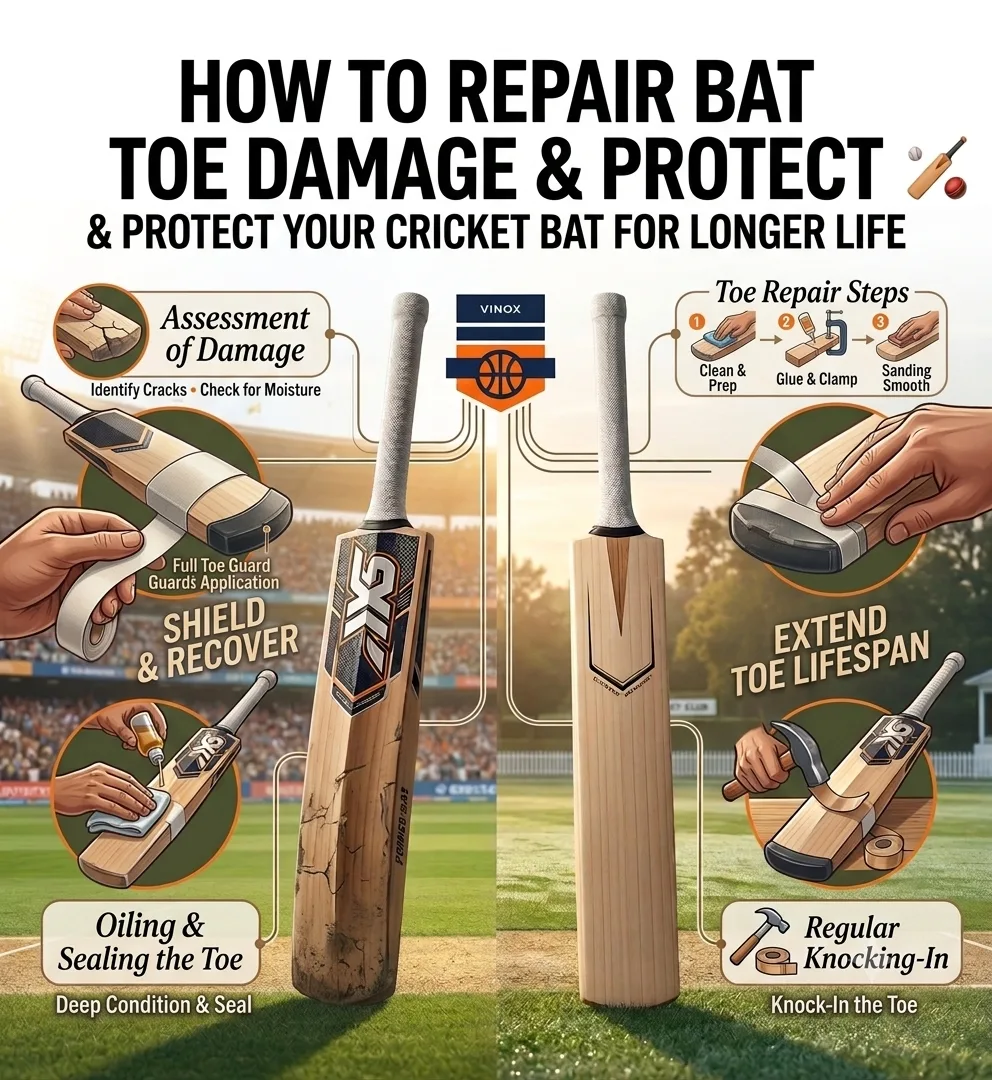
Prevent Cricket Bat Damage A cricket bat is one of the most important pieces of cricket equipment. However, regular use can cause small cracks, dents, and other damage. The toe is especially vulnerable because it often touches the ground during batting.
Therefore, every player should know how to protect and repair the toe. Proper care can help your bat stay strong and perform well for a longer time. This is important whether you use a Cricket bat for leather ball matches or regular practice.
In this guide, we will explain how to repair bat toe damage, what causes it, and how you can protect your cricket bat from future damage.
What Is Bat Toe Damage?
The toe is the bottom part of a cricket bat. It takes a lot of impact during batting. In addition, it can hit hard pitches, grass, dirt, and moisture.
As a result, the toe may develop small cracks or dents. In some cases, the wood may also become soft or swollen.
Common types of bat toe damage include:
- Small cracks
- Toe swelling
- Wood chips
- Deep dents
- Moisture damage
- Loose toe guards
- Soft or weak wood
- Separation near the bottom
Fortunately, minor damage can often be repaired. However, serious damage should be checked by a professional bat repairer.
What Causes Cricket Bat Toe Damage?
Several factors can damage the toe of your cricket bat. Understanding these causes can help you prevent future problems
1. Hard Pitch Impact Prevent Cricket Bat Damage
Players often tap their bats on the pitch before facing a ball. Although light tapping is normal, hard and repeated tapping can damage the toe.
Moreover, rough and hard pitches can increase the impact. Therefore, players looking for a Power hitting cricket bat should also pay attention to toe protection because powerful batting can place extra stress on the bat.
2. Wet Conditions Prevent Cricket Bat Damage
Water is one of the biggest enemies of a wooden cricket bat. When willow absorbs water, it can become soft and swollen.
Therefore, avoid using your bat on very wet pitches whenever possible.
3. Poor Storage Prevent Cricket Bat Damage
A cricket bat should always be stored in a dry place. If it is kept in a damp room or inside a wet kit bag, moisture can reach the toe.
Consequently, the wood may become weak over time
4. Lack of Toe Protection Prevent Cricket Bat Damage
A toe guard provides an extra layer of protection. Without one, the bottom of the bat can receive direct impact from the pitch.
For this reason, a good toe guard is useful for regular players. It is also helpful for anyone choosing a Cricket bat for tennis ball, as repeated ground contact during practice can still affect the toe.
Signs That Your Bat Toe Needs Repair
You should inspect your cricket bat regularly. Early damage is much easier to manage.
Look for these signs:
- A visible crack on the toe
- Small pieces of wood coming off
- Swelling at the bottom
- A loose toe guard
- Dark moisture marks
- Soft wood
- A deep dent
- A gap between wood sections
If the crack is small, you may be able to repair it. On the other hand, a large crack may require professional attention.
How to Repair Minor Bat Toe Damage
Minor toe damage can sometimes be repaired at home. Before starting, make sure the bat is completely dry.
Step 1: Clean the Toe
First, remove dirt, grass, and loose wood from the damaged area.
Use a soft and dry cloth. Do not wash the bat with water. Also, avoid using strong cleaning chemicals.
The surface should be clean before you start the repair.
Step 2: Let the Bat Dry
If you notice moisture around the toe, allow the bat to dry naturally.
Place it in a dry and well-ventilated room. However, do not put it directly under strong sunlight.
Similarly, never use a heater, hair dryer, or other strong heat source. Excessive heat can damage the willow.
Step 3: Check the Crack
Next, examine the damaged area carefully.
If the crack is small and shallow, a suitable wood adhesive or cricket bat repair adhesive may help.
However, stop the repair process if the crack is deep or extends far into the blade.
Step 4: Apply Suitable Adhesive
Apply a small amount of suitable adhesive to the damaged area. Do not use too much glue.
Then, gently bring the cracked sections together.
The repair should remain stable while the adhesive dries.
Step 5: Allow It to Cure
Follow the drying instructions provided with the adhesive.
Most importantly, do not use the bat before the repair has fully cured. Using it too early can cause the crack to open again.
Step 6: Smooth the Area
Once the adhesive has completely dried, you can lightly smooth the repaired area.
Use fine sandpaper and work slowly. Do not remove too much willow.
The goal is simply to create a smooth surface.
Use a Toe Guard for Extra Protection
A toe guard is one of the easiest ways to protect your cricket bat.
It creates a protective barrier between the willow and the pitch. Therefore, it can reduce damage caused by hard surfaces, dirt, grass, and moisture.
A good toe guard can help protect against:
- Pitch impact
- Moisture
- Dirt
- Small scratches
- Repeated tapping
- Minor toe damage
If your existing toe guard becomes loose or damaged, replace it as soon as possible.
Keep Your Cricket Bat Away From Water
Moisture can seriously affect a wooden cricket bat. Therefore, keeping your bat dry should be a priority.
If your bat becomes wet, wipe it with a dry cloth immediately. Then, allow it to dry naturally in a ventilated room.
Do not place a wet bat inside a closed cricket bag.
Otherwise, moisture can remain trapped around the bat. Over time, this may cause swelling, cracks, or other problems.
Store Your Cricket Bat Properly
Good storage can increase the useful life of your cricket bat.
First, keep the bat in a cool and dry place. Also, keep it away from direct sunlight and heat.
Use a proper bat cover to protect it from dust and scratches. However, make sure the bat is completely dry before storing it inside the cover for a long period.
Furthermore, do not place heavy cricket equipment on top of the bat. Extra pressure may create dents or cracks.
Choose the Right Bat for Your Playing Style
Bat care starts before you even enter the field. The right bat should match your playing style, skill level, and budget.
For example, beginners may look for a Cricket bat for beginners that is easy to control and comfortable to use. Meanwhile, experienced players may need a different balance and profile.
Players who want a professional-level option may search for a Cricket bat for professional players with suitable willow quality, weight, pickup, and balance.
Budget is also important. Many players compare options such as the Best cricket bat under ₹5000 before making a purchase.
For players interested in English willow, the Best English willow cricket bat under ₹10000 can be considered when balancing quality and budget.
Similarly, players who prefer easier bat control may look for a Lightweight cricket bat for players that offers comfortable pickup without feeling too heavy.
Bat Care for T20 and Different Playing Styles
Modern cricket requires different bat designs for different formats. Players who enjoy fast scoring may search for a T20 cricket bat India option with a suitable profile, balance, and hitting area.
However, a powerful bat still needs proper maintenance. Regular toe checks, careful storage, and moisture protection can help maintain its condition.
Players should also compare Affordable cricket bat brands India when they want reliable equipment without spending too much.
Similarly, those interested in premium willow can explore Affordable English Willow Bats in India and compare their weight, grains, pickup, and overall construction.
Avoid Hard Bat Tapping
Bat tapping is a common part of batting preparation. However, excessive force can damage the toe.
Therefore, use controlled movements when tapping the bat.
This is especially important on hard, dry, or uneven pitches. A little extra care can prevent unnecessary toe damage.
Check Your Bat After Every Few Matches
Regular inspection is an easy way to protect your cricket bat.
After every few matches or practice sessions, check the toe, edges, face, handle, and splice.
Look for new cracks, loose parts, or changes in the shape of the wood.
If you find a small problem early, it can often be repaired before it becomes a major issue.
When Should You Visit a Professional?
Not every type of bat toe damage should be repaired at home.
You should contact a professional bat repairer if:
- The crack is deep
- A large piece of wood is missing
- The toe has separated
- The wood feels very soft
- The bat has major moisture damage
- The crack keeps opening
- The blade is badly damaged
- The handle or splice is affected
A professional can inspect the bat and recommend the right repair
Tips to Protect Your Cricket Bat for Longer
Follow these simple tips to increase your bat’s life:
- Keep your cricket bat dry.
- Use a quality toe guard.
- Avoid playing on very wet pitches.
- Do not tap the bat too hard.
- Store the bat in a dry place.
- Keep it away from direct heat.
- Check the toe regularly.
- Repair small cracks early.
- Use the correct bat for your playing conditions.
- Get serious damage checked by an expert.
Final Thoughts
Learning how to repair bat toe damage can help you maintain your cricket bat and avoid unnecessary replacement costs.
However, prevention is even more important. Keep the bat dry, use a toe guard, avoid excessive tapping, and inspect the toe regularly.
Moreover, never ignore a deep crack or serious moisture damage. Professional repair can help prevent further problems.
With proper care and regular maintenance, your cricket bat can remain strong and reliable for many matches. Whether you play leather-ball cricket, tennis-ball cricket, T20 cricket, or competitive cricket, taking care of your bat is an important part of improving its life and performance.
Click Now & Buy
the Best Cricket Bats from – vinox sports


 No products in the cart.