
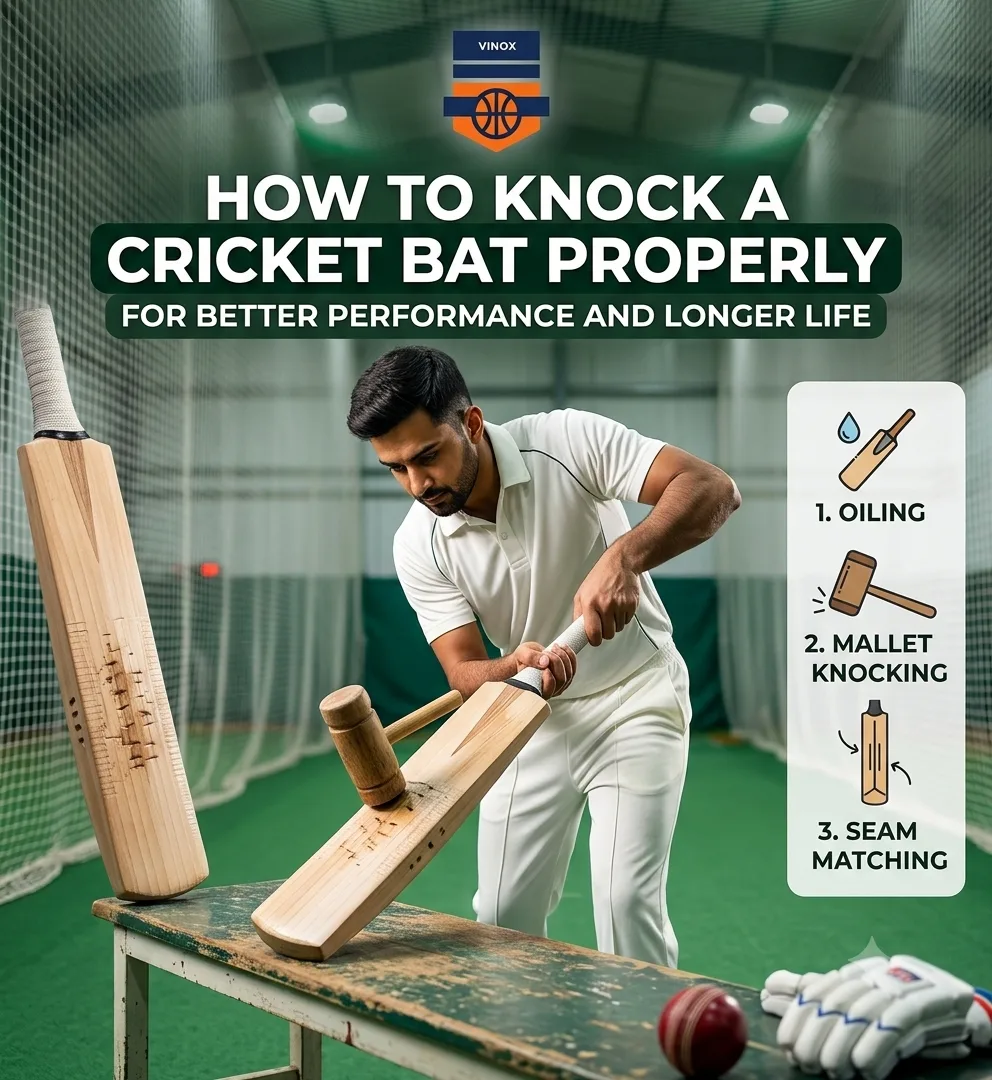
How To Prepare Bat A new cricket bat feels exciting, especially when you are ready to take it to the ground. However, you should not use a new bat with a hard leather ball straight away. First, the bat needs proper preparation. This process is known as cricket bat knocking.
Knocking a cricket bat helps prepare the willow for regular ball impact. It can also reduce the risk of cracks, dents, and surface damage. Therefore, proper knocking is an important part of cricket bat care.
Whether you have an English willow or Kashmir willow bat, knowing how to knock a cricket bat properly can help you get better performance and longer bat life.
What Is Cricket Bat Knocking? How To Prepare Bat
Cricket bat knocking is the process of gently hitting the bat face with a special wooden mallet. The controlled impact gradually compresses the willow fibers on the bat face.
As a result, the surface becomes better prepared to handle the impact of a leather cricket ball.
However, knocking is not about hitting the bat as hard as possible. Instead, it is a slow and controlled process. The pressure should be increased gradually as the bat becomes more prepared.
Why Is Knocking a Cricket Bat Important?
A cricket bat goes through strong impact during every innings. A leather cricket ball can hit the bat with considerable force. Therefore, a new bat should be prepared before regular match use.
Here are some important benefits of proper knocking.
1. Helps Reduce Surface Damage
A new willow surface can be vulnerable to hard impacts. Proper knocking gradually prepares the fibers. Therefore, the chances of serious surface damage can be reduced.
2. Prepares the Willow
Knocking helps the willow adjust to repeated ball impact. This preparation is especially useful for players who use a Cricket bat for leather ball cricket.
3. Supports Better Performance
A properly prepared bat can perform more consistently during practice and matches. Moreover, regular bat care helps maintain its condition.
For players searching for a Best cricket bat under ₹5000, proper preparation is just as important as choosing the right bat.
4. Can Increase Bat Life
Good preparation does not make a bat indestructible. However, it can help reduce avoidable damage. Along with proper storage and maintenance, knocking can help your bat last longer.
What Do You Need to Knock a Cricket Bat?
You do not need many tools for the process. Usually, you need:
- A cricket bat mallet
- Your cricket bat
- A clean and dry surface
- A bat cover
- Optional edge and toe protection
A wooden mallet is commonly used for manual knocking. It gives you better control over the amount of force.
Before you start, check the manufacturer’s instructions. Some bats are supplied pre-knocked or partially prepared. In that case, the required preparation may be different
How to Knock a Cricket Bat Properly
Step 1: Inspect the Bat
First, carefully check the entire bat. Look at the face, edges, toe, and shoulders.
Make sure there are no major cracks, splits, or other signs of damage. If you notice a serious problem, do not start knocking.
Also, check whether the bat has already been knocked in by the manufacturer
Step 2: Start With Gentle Knocking
Place the bat on a stable surface. Then, start hitting the central area of the bat face with very gentle mallet taps.
Do not use heavy force at this stage.
Focus on the main playing area and keep your hits controlled. The purpose is to slowly compress the willow rather than damage it.
Step 3: Cover the Main Playing Area
Next, move the mallet across the main hitting area.
Do not keep hitting one small spot. Instead, work across the face evenly. This helps prepare a wider playing area.
However, avoid hitting the edges directly with strong force.
Step 4: Increase the Pressure Slowly
After several gentle sessions, you can gradually increase the force.
The mallet should still be controlled. You should never swing it with maximum power.
Furthermore, continue moving across the bat face. This helps prevent excessive pressure on one area.
Step 5: Prepare the Edges Carefully
The bat edges require extra care.
Start with light taps near the edges. Gradually increase the pressure as the edges become prepared.
Never strike a sharp edge with full force. Instead, use controlled movements to help compress and round the edge area.
Step 6: Check the Bat
Stop regularly and inspect the bat.
Look for:
- Cracks
- Deep dents
- Splits
- Loose fibers
- Unusual marks
Small surface marks may occur during normal preparation. However, deep cracks or splits should not be ignored.
Step 7: Test With an Old Leather Ball
Once the bat has been properly knocked, test it with an older leather cricket ball.
Start with gentle throw-downs. Do not begin with fast bowling.
If the bat handles the ball without excessive damage, you can slowly increase the pace. This gradual approach gives the bat more time to adjust.
How Long Does It Take to Knock a Cricket Bat?
The required time can vary from one bat to another. It depends on the willow, bat preparation, manufacturer instructions, and the amount of knocking already completed.
Manual knocking may take several hours and can be divided into multiple sessions.
Therefore, do not rush the process. The goal is proper preparation, not simply completing a fixed number of hours.
Some bats are supplied pre-knocked. Even so, you should follow the manufacturer’s instructions before using them against a hard leather ball.
Common Cricket Bat Knocking Mistakes
Hitting Too Hard How To Prepare Bat
This is one of the most common mistakes. Excessive force can damage the willow.
Instead, start gently and increase the pressure slowly.
Using a New Bat in a Match
A completely new and unprepared bat should not be taken straight into a competitive match.
First, prepare the bat properly. Then, test it with controlled throw-downs.
Ignoring the Edges
The edges can be more vulnerable than the central playing area. Therefore, they should be prepared carefully.
Knocking Only the Sweet Spot
Do not focus only on the sweet spot. The main playing area should be prepared evenly.
Skipping Inspections
Always check your bat during the process. If you notice serious damage, stop immediately.
Does Every Cricket Bat Need Knocking?
Not every cricket bat needs the same amount of preparation.
For example, some modern bats are already pre-knocked. Others may require additional preparation before they can be used with a hard leather ball.
Therefore, always read the product instructions first.
Players looking for a Best English willow cricket bat under ₹10000 should also check the manufacturer’s preparation instructions before starting the knocking process.
On the other hand, a Cricket bat for tennis ball may not require the same level of preparation as a leather-ball bat. Still, careful handling is useful for maintaining the equipment.
Choosing a Bat for Your Playing Style How To Prepare Bat
Knocking is important, but choosing a suitable bat is important too.
A Lightweight cricket bat for players can be useful for cricketers who prefer quick bat movement and easier control. Meanwhile, players who focus on aggressive strokes may prefer a Power hitting cricket bat with a suitable profile and weight.
Similarly, players searching for a T20 cricket bat India option may look for a bat that supports quick stroke play and strong hitting.
Beginners should also consider comfort, balance, weight, and handle size. A Cricket bat for beginners should feel easy to control rather than simply being the heaviest option available.
Experienced players may have different requirements. A Cricket bat for professional players can be selected according to playing style, willow grade, profile, balance, and personal preferences.
Tips to Make Your Cricket Bat Last Longer
Knocking is only one part of proper bat maintenance.
For better protection:
- Keep the bat away from water.
- Store it in a dry place.
- Use a proper bat cover.
- Avoid hitting stones or hard surfaces.
- Keep the bat away from extreme heat.
- Check it regularly for cracks.
- Repair damage as soon as possible.
- Use suitable cricket balls for practice.
- Avoid unnecessary impacts.
Moreover, never leave your cricket bat in a damp area for a long time. Moisture can affect the willow and may lead to problems over time.
When choosing from Affordable cricket bat brands India, also look at product specifications, willow quality, preparation, and after-sales support rather than focusing only on price.
For players interested in Affordable English Willow Bats in India, proper care is equally important after purchase. A quality bat still needs suitable preparation and regular maintenance.
When Should You Stop Knocking? How To Prepare Bat
You should stop when the bat has received the preparation recommended by the manufacturer and can handle controlled ball impacts without excessive damage.
Remember, more knocking is not always better.
The purpose of knocking is to prepare the willow gradually. It is not meant to make the bat completely resistant to damage.
If you see serious cracking, splitting, or fiber separation, stop the process and seek professional advice.
Final Thoughts
Learning how to knock a cricket bat properly is an important part of cricket bat care. A slow and controlled approach can help prepare the willow for regular use.
First, inspect your bat. Then, begin with gentle mallet taps. Gradually increase the pressure and carefully prepare the edges. Finally, test the bat with controlled throw-downs before using it in a competitive match.
At the same time, remember that proper knocking is only one part of bat maintenance. Keep your bat dry, store it correctly, and avoid unnecessary hard impacts.
With the right preparation and regular care, your cricket bat can remain in good condition and deliver reliable performance for a longer time.
Click Now & Buy
the Best Cricket Bats from – vinox sports


 No products in the cart.