
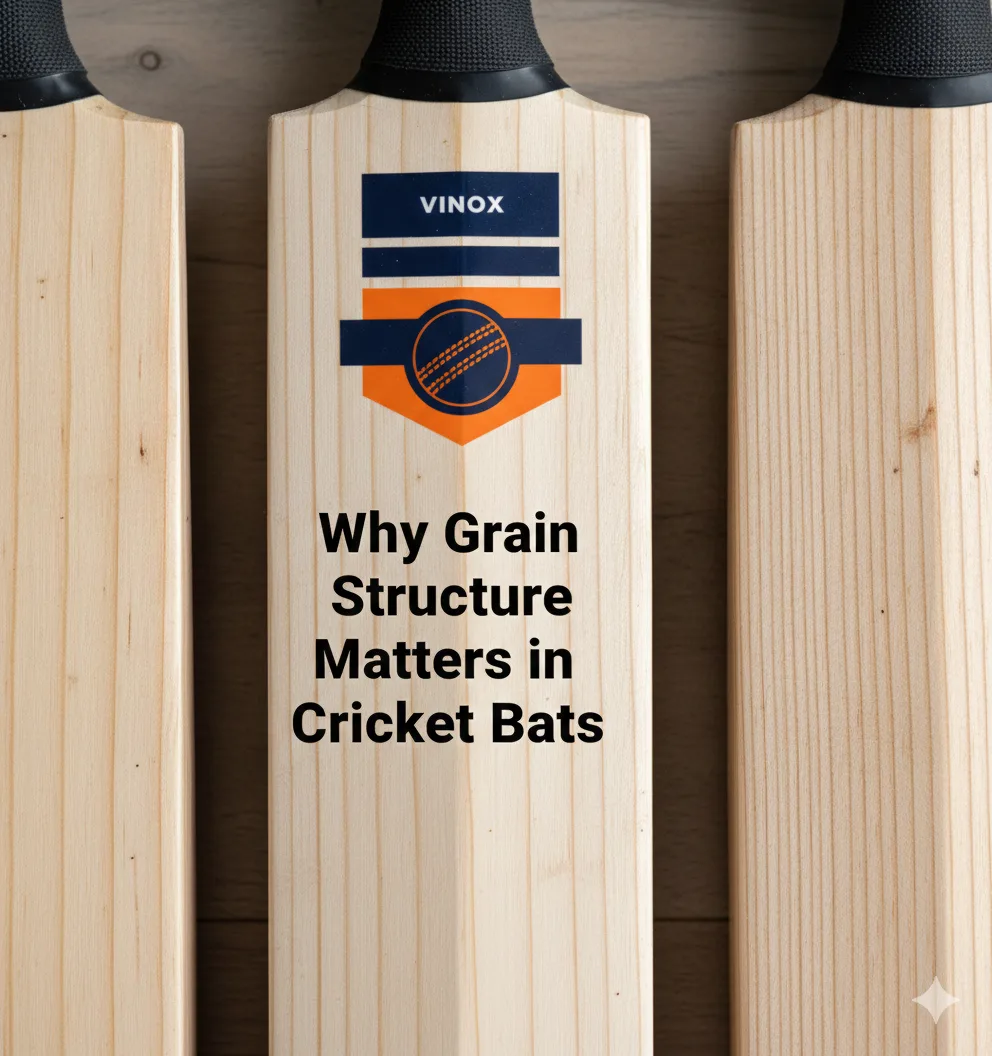
“When cricketers talk about finding the perfect bat, conversations usually revolve around weight, balance, and brand. But one critical factor often overlooked—especially by beginners—is grain structure cricket bats. The grain pattern on a cricket bat is far more than a visual detail. It plays a major role in performance, durability, and even how a bat feels in your hands. Understanding why grain structure matters can help you choose a bat that truly matches your playing style and level, whether you’re searching for the best cricket bat under ₹5000 India or a professional-grade willow bat.”
–> For a wide range of high-quality cricket bats with perfect grain structure, check out the collection at Vinox Sports and find the bat that suits your game.
What Is Grain Structure in a Cricket Bat?
“Grain structure cricket bats refers to the natural vertical lines visible on the face of a cricket bat. These lines are actually the growth rings of the willow tree from which the bat is made. Each grain represents one year of the tree’s growth. The way these grains appear—straight, even, wide, or narrow—tells a story about the willow’s age, quality, and playing characteristics.”
High-quality bats, such as those found among the best cricket bat in India range, typically feature straight, evenly spaced grains running from the top of the blade to the toe. Any irregularities, such as wavy or broken grains, may indicate lower-grade willow or inconsistent performance. Players looking for a cricket bat for T20 India formats often prioritize straight grains for quick response and consistent ball contact.
Number of Grains: Does It Really Matter?
One of the most common questions among players is about the number of grains on a bat. Generally, cricket bats have anywhere between 5 to 12 grains, and each range offers different advantages.
5–6 grains: These bats are made from older willow, like many best kashmir willow cricket bat in India options. They tend to be harder and more durable, making them ideal for aggressive players who play powerful shots. However, they may require more knocking-in.
7–9 grains: Considered the sweet spot by many professionals, this range offers an excellent balance of power, responsiveness, and longevity, suitable for a cricket bat for professional use.
10–12 grains: These bats come from younger willow and are usually softer. They provide great ping and performance right from the start but may not last as long. Many entry-level bats, including some Kashmir willow cricket bat under ₹5000, fall into this category.
There is no “perfect” grain count—it depends entirely on your playing style and how often you play.
Straight Grains and Bat Performance
Straight grains are a sign of well-prepared, high-quality willow. When grains run straight down the blade, energy transfer from bat to ball is more efficient. This means better timing, cleaner shots, and more consistent performance. Choosing a best cricket bat India 2025 or any quality professional bat with straight grains ensures reliable performance in all formats, whether Test cricket or T20 cricket in India.
Crooked or uneven grains can cause unpredictable ball response and reduce the bat’s overall durability. For serious cricketers, straight grains are often a non-negotiable feature.
Grain Width and Its Impact
Grain width also plays a crucial role in how a bat performs:
Wider grains usually indicate older, slower-grown willow. These bats are tougher and more resilient, ideal for longer formats and rough playing conditions. Many best cricket bat under ₹5000 India models use wide grains for durability.
Narrow grains suggest younger willow that is lighter and more responsive, making it popular in limited-overs and cricket bat for T20 India formats.
Neither is better by default. The key is choosing a grain width that aligns with your format of play and personal preferences.
Durability and Longevity of the Bat
Grain structure directly affects how long a cricket bat lasts. Bats with fewer, wider grains are typically more durable and resistant to cracks. On the other hand, bats with many thin grains may perform brilliantly early on but could wear out faster if not maintained properly. Opting for a best kashmir willow cricket bat in India or a cricket bat for professional use ensures longer life with consistent performance.
Proper knocking-in, oiling, and storage can significantly extend the life of any bat, regardless of grain structure. Still, starting with the right grain pattern gives you a clear advantage.
Aesthetic Appeal vs. Practical Value
Some players choose bats based purely on how clean and symmetrical the grains look. While aesthetics can reflect quality, performance should always come first. A bat with slightly uneven grains can still play exceptionally well if the willow is well-seasoned and pressed correctly. Many best cricket bat in India options balance both visual appeal and functional performance.
Professional players often prioritize feel, pickup, and balance over visual perfection—an important lesson for amateur cricketers.
How Grain Structure Affects Playing Style
Your role as a batter should influence your grain preference:
Power hitters often prefer bats with fewer grains for added strength and durability, such as best cricket bat India 2025 or older willow models.
Stroke players may enjoy bats with more grains that offer better touch and quicker response, including some Kashmir willow cricket bat under ₹5000 options.
All-round players usually go for a balanced grain count that suits multiple formats, whether a cricket bat for professional matches or casual games.
Understanding this relationship helps you make a smarter, more personalized bat selection.
Final Thoughts
Grain structure is not just a cosmetic feature—it’s a window into the soul of a cricket bat. From power and performance to durability and feel, the grain pattern influences every aspect of how a bat behaves on the field. By paying attention to the number, straightness, and width of grains, you can choose a bat that complements your game and lasts longer, whether you’re hunting for the best cricket bat under ₹5000 India, a cricket bat for T20 India, or a best kashmir willow cricket bat in India.
The next time you pick up a cricket bat, don’t just check the brand or weight. Take a closer look at the grains—they might be telling you exactly how that bat will perform when it matters most.

 No products in the cart.